The African Centre for Democracy and Human Rights Studies (ACDHRS) participated in Session One of the 15th Biennial Conference of the Network of African National Human Rights Institutions held in Yaoundé, Cameroon. The session focused on the Original Aspects of the African Charter on Human and Peoples’ Rights within the broader conference theme:
“Original Aspects of the African Human Rights Instruments and Jurisprudence – Leveraging African Human Rights Instruments and Jurisprudence for Strengthened Human Rights Implementation: The Strategic Role of African National Human Rights Institutions.”
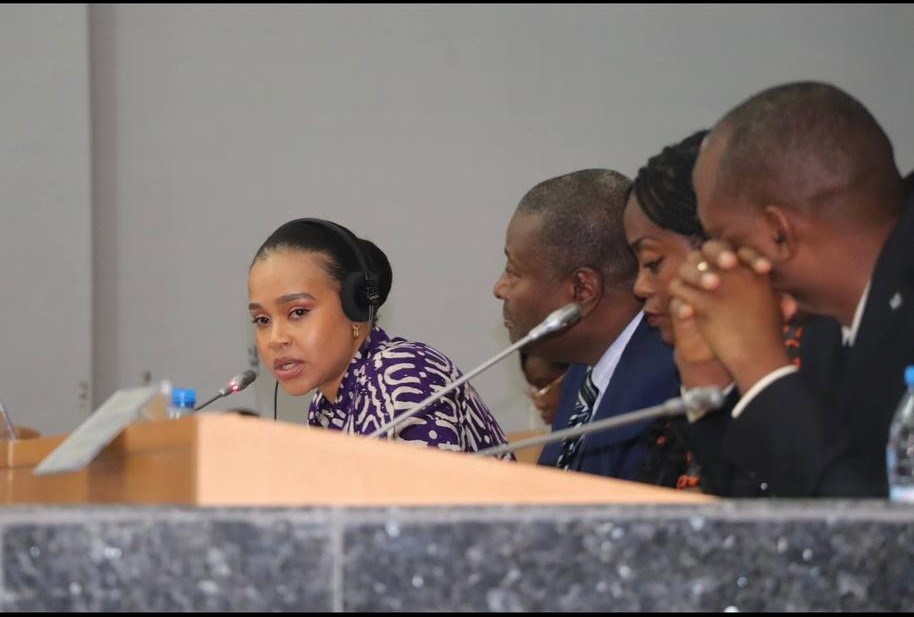
Ms. Salan L. Gibbs represented ACDHRS as a panelist during the session, contributing a civil society perspective to discussions on strengthening the implementation of regional human rights standards.
Examining the Distinctiveness of the African Charter
The session was moderated by Professor Agnés Makougoum of Université de Yaoundé II Soa and brought together key stakeholders, including Mr. Eric Bizimana, Senior Legal Officer at the African Commission on Human and Peoples’ Rights, and Mr. Emmanuel Joof, Chairperson of the National Human Rights Commission of The Gambia.
Opening the discussion, Mr. Bizimana highlighted the unique features of the African Charter on Human and Peoples’ Rights, emphasizing the broad mandate of the African Commission, including its communications procedure, state reporting processes under Article 62, and evolving jurisprudence that continues to give practical meaning to the Charter.
Mr. Joof underscored the important distinction between State obligations and the mandates of National Human Rights Institutions (NHRIs). He emphasized that NHRIs serve as oversight, advisory, and accountability bodies, and must proactively engage regional human rights mechanisms to ensure effective domestic implementation.
The Constitutional Originality of the Charter
From a civil society standpoint, Ms. Salan Gibbs stressed that the African Charter’s constitutional originality lies in its practical relevance to African realities.
Two distinctive features were highlighted:
Collective (Peoples’) Rights
The Charter’s recognition of collective rights enables communities to frame systemic harms, including environmental degradation, land dispossession, and development-induced displacement, as violations affecting entire groups. Jurisprudence, such as the landmark SERAC v Nigeria case demonstrates how the Charter addresses environmental and socio-economic harms in a way that reflects lived realities across the continent.
Equal Status of Socio-Economic Rights
Unlike many regional human rights systems, the African Charter does not establish a hierarchy between civil and political rights and socio-economic rights. This allows civil society actors to challenge structural deprivation, corruption, illicit financial flows, and inadequate public services as rights violations rather than mere policy shortcomings. Access to health, education, housing, and social protection can therefore be framed as enforceable obligations.
From Recognition to Remedy: Bridging the Implementation Gap
While the African Charter enjoys universal ratification across Africa and possesses strong normative foundations, the panel acknowledged that its promise weakens when findings of violations are not followed by effective remedies.
Persistent delays in compensation, limited restoration measures, shrinking civic space, and weak guarantees of non-recurrence continue to undermine tangible protection for affected communities. The discussion concluded that the challenge lies not in the Charter’s design, but in domestic implementation structures, follow-up mechanisms, and sustained political will.
The Strategic Role of NHRIs
A key focus of the session was the strategic role of NHRIs in activating the Charter’s protections. Panelists emphasized the importance of:
- Active participation in African Commission public sessions;
- Meaningful engagement with Article 62 State reporting processes;
- Systematic follow-up on Commission findings and recommendations;
- Evidence-based interventions grounded in credible documentation.
The role of civil society spaces, including NGO engagement platforms preceding Commission sessions, was also underscored as critical for consolidating community-based evidence and strengthening accountability.
A Call for Deliberate Action
In her intervention, Ms. Salan L. Gibbs emphasized:
“The African Charter is not lacking in strength. The responsibility lies with institutions, particularly National Human Rights Institutions, to activate its protection. When NHRIs deliberately engage regional jurisprudence, use existing platforms, and ground their work in credible evidence, the Charter moves from principles to practical protection for communities.”
The session concluded that the constitutional originality of the African Charter remains one of Africa’s strongest legal foundations for human rights protection. Its transformative potential, however, depends on deliberate, coordinated, and sustained action at the national level through collaboration among NHRIs, civil society, academia, and regional mechanisms.
Through its participation, ACDHRS reaffirmed its commitment to strengthening the effective implementation of African human rights instruments and supporting institutions that work to translate regional standards into meaningful protection for communities across the continent.
