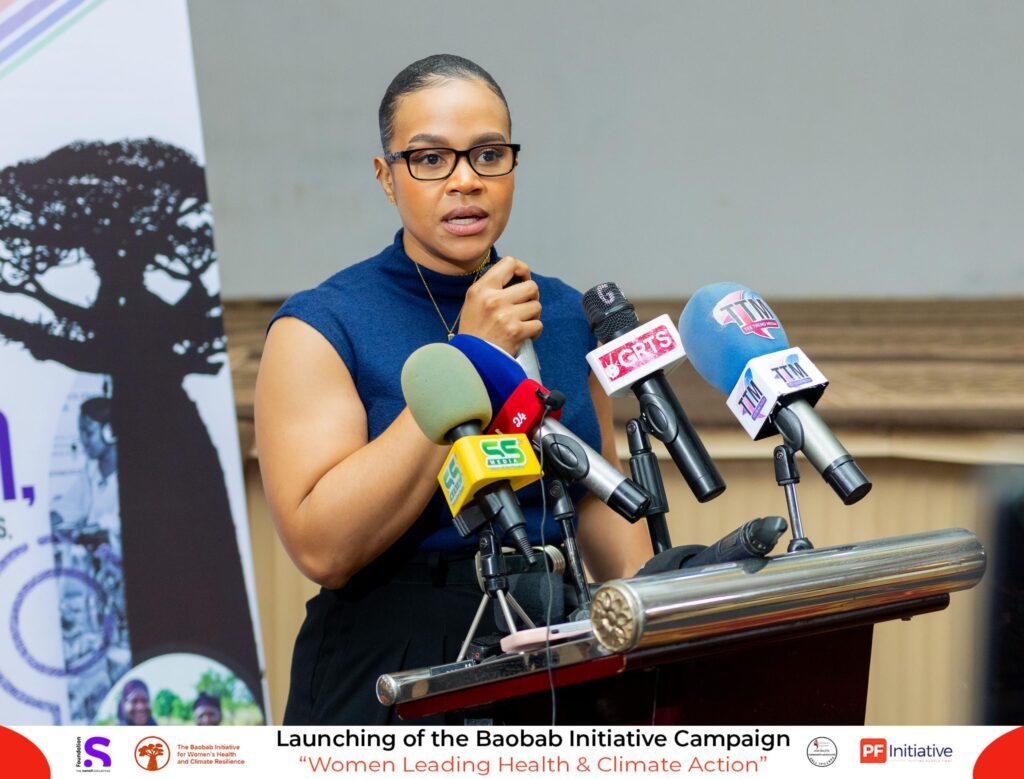
The African Centre for Democracy and Human Rights Studies (ACDHRS) participated in the launch and press conference of the Baobab Initiative – “Women Leading Health and Climate Action”, held on 29 January 2026 at Penchami Hall. The Centre was represented by Mrs Salan Gibbs, Programme Manager, who spoke on behalf of the Executive Director, Madam Hannah Forster.
The event, organised by the PF Initiative (formerly Paradise Foundation), convened women leaders, civil society organisations, health practitioners, humanitarian actors, community representatives, and government stakeholders to discuss the growing impacts of climate change, particularly extreme heat, on women’s health and wellbeing.
Climate Change, Health and Environmental Justice
In its intervention, ACDHRS emphasised that climate change is not only an environmental concern but also a human rights, public health, and environmental justice issue. From a gender-responsive and rights-based perspective, the Centre highlighted how climate-related stressors disproportionately affect women and girls, especially those in low-income and informal settings.
ACDHRS drew attention to the concept of environmental justice, which examines who bears the greatest burden of environmental harm and who has limited access to protection, resources, and decision-making. In many communities, women and girls experience heightened exposure to climate risks while facing structural barriers that limit their ability to adapt.
Extreme Heat and Gendered Vulnerabilities
The Centre underscored that extreme heat disproportionately affects women due to unpaid care and domestic labour, prolonged exposure to heat during cooking, limited access to clean energy, and restricted access to healthcare and cooling infrastructure. These realities expose women to health risks they did not create, reinforcing existing inequalities.
ACDHRS stressed that addressing extreme heat and climate-related health risks requires equity-focused and gender-responsive climate action that recognises and addresses these structural challenges.
Women’s Leadership in Climate and Health Responses
Speaking on behalf of the Executive Director, the Centre reaffirmed that women must not only be protected from climate-related harm but must also be recognised as leaders in climate and health solutions. Women’s leadership is central to advancing clean cooking practices, improving household and community nutrition, promoting community-based health education, and shaping inclusive climate responses rooted in lived experience.
Environmental justice, the Centre noted, can only be achieved when those most affected by climate impacts play a leading role in designing and implementing solutions.
Community-Led Initiatives and Partnerships
ACDHRS highlighted initiatives such as the Baobab Initiative as practical examples of environmental justice in action. Community-led and women-driven approaches help ensure that climate and health interventions are culturally appropriate, sustainable, and responsive to community needs.
The Centre further emphasised the importance of collaboration between civil society organisations, human rights institutions, humanitarian actors, and women-led community initiatives in advancing inclusive, rights-based climate and health responses.
Institutional Commitment
ACDHRS reaffirmed its commitment to:
- Supporting women-led initiatives;
- Strengthening climate-responsive, community-based health systems; and
- Promoting equity and inclusion in climate and health policy and practice.
In closing, the Centre commended the organisers and participants for creating a platform that centres women’s leadership at the intersection of health, climate, and environmental justice, reiterating that climate action without justice remains incomplete.
