By ACDHRS Communications
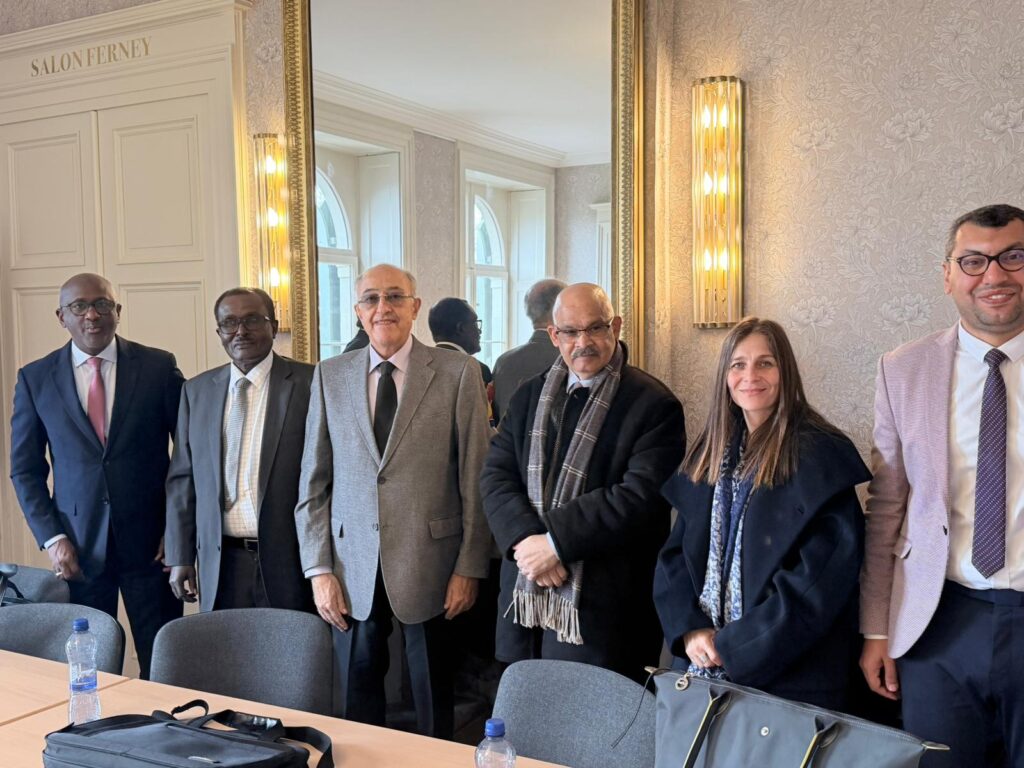
At a high-level panel held at the Palais des Nations in Geneva on 24 March 2026, ACDHRS Governing Council Member Mr. Abdelbagi Jibril delivered a compelling intervention reflecting on the upcoming 25th anniversary of the Durban Declaration and Programme of Action.
Speaking under the theme “Mobilising Global Public Support for its Full Implementation,” Mr. Jibril recalled the historic moment of August–September 2001, when global leaders, activists, and victims of racial injustice convened in Durban with immense hope for a future grounded in dignity, equality, and peaceful coexistence.
“Millions of victims of racism looked at us with great expectations,” he noted, emphasizing that the aspirations of those affected communities were clear: an end to systemic discrimination and the realization of peace within the shared human race.
However, Jibril expressed deep concern that, 25 years later, many of these aspirations remain unfulfilled. He pointed to the persistence, and in some cases escalation, of global conflicts, both intra-state and inter-state, as evidence that the vision of a peaceful and equitable world remains elusive.
More troubling, he highlighted the resurgence of racist ideologies across both developed and developing regions. Referencing political trends in countries such as the United States, United Kingdom, and France, Jibril warned of the growing influence of far-right movements and xenophobic narratives within mainstream political discourse. He cited recent electoral developments in France, where extremist rhetoric has gained traction, as a worrying indicator of shifting political landscapes.
Mr. Jibril also drew attention to instances of racial discrimination beyond Western contexts. During the COVID-19 pandemic, he noted, reports emerged from China of Africans being denied access to essential services, including healthcare and public spaces, solely on the basis of race.
In his intervention, he underscored the dangerous role of digital platforms in amplifying hate speech and racial intolerance. He warned that “hate mongers” are increasingly exploiting public domains to spread discrimination against Africans and migrant communities, normalizing harmful narratives at an unprecedented scale.
He further expressed alarm at statements from influential global figures that appear to undermine decades of progress in combating racism and colonial legacies. Such rhetoric, he stressed, threatens to erode the collective achievements made through international cooperation and advocacy.
Despite these challenges, Mr. Jibril concluded on a note of cautious optimism. He reminded the audience that the global community already possesses the tools needed to combat racism, the problem has been diagnosed, and solutions clearly articulated within the Durban framework.
“The issue now is not the absence of solutions,” he emphasized, “but the lack of political will to implement them fully.”
Drawing lessons from history, he pointed to the successful dismantling of apartheid systems in Southern Africa under the leadership and coordination of the United Nations. He highlighted how sustained resistance by affected communities, combined with international solidarity, led to transformative outcomes, from the birth of Zimbabwe to the emergence of democratic South Africa.
As the world approaches the 25th anniversary of the Durban Declaration, Jibril called for renewed global commitment, unity, and action to confront racism in all its forms. His message was clear: the promise of Durban can still be realized, but only if states, institutions, and individuals collectively rise to the challenge.
