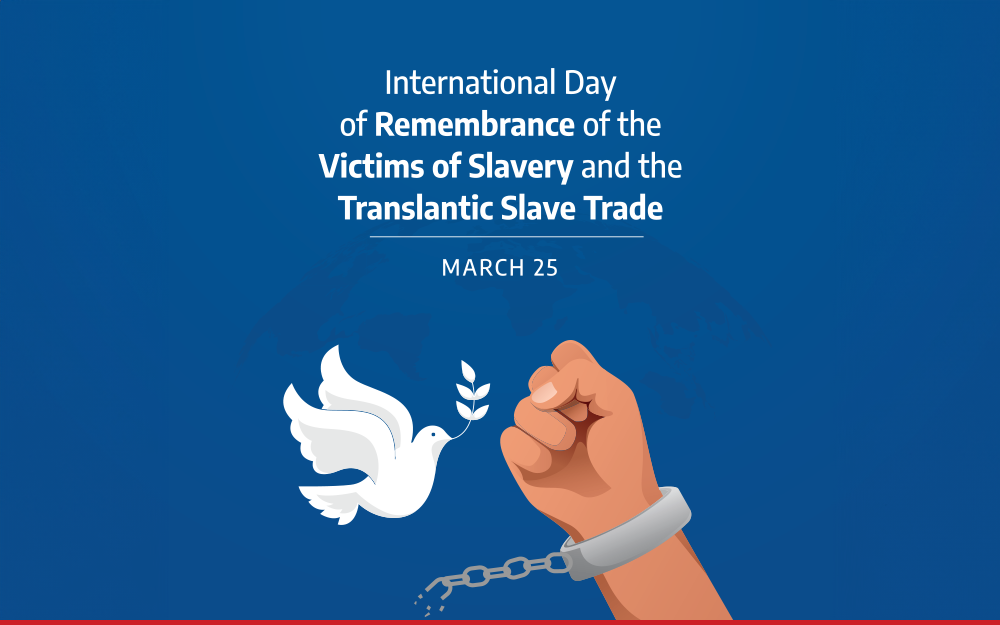
On this solemn day, commemorated by the United Nations, the African Centre for Democracy and Human Rights Studies (ACDHRS) joins the global community in honoring the memory of the millions of African men, women, and children who were subjected to the horrors of slavery and the transatlantic slave trade.
This year’s commemoration is particularly significant. On 25 March 2026, the United Nations General Assembly adopted a historic resolution, tabled by Ghana on behalf of the African Union, formally recognizing the transatlantic slave trade and the racialized enslavement of Africans as the “gravest crime against humanity.” This landmark decision marks a critical step toward truth, justice, and global acknowledgment of the scale and enduring impact of this atrocity.
ACDHRS welcomes this resolution, which not only affirms historical truth but also calls for meaningful reparatory justice. The resolution urges Member States to consider official apologies, contribute to reparations frameworks, and invest in education and skills development initiatives for the descendants of enslaved Africans. Importantly, it also calls for the return of cultural artifacts looted during the colonial era, an essential step in restoring dignity, identity, and heritage to affected communities.
The adoption of this resolution, with overwhelming global support, signals a growing international consensus on the need to confront the lasting legacies of slavery, including systemic racism, economic inequality, and social exclusion that continue to affect people of African descent worldwide.
As we remember the victims, we also honor their resilience, resistance, and enduring legacy. Their struggles laid the foundation for ongoing movements for justice, equality, and human rights. Today, remembrance must go beyond reflection, it must translate into concrete action.
ACDHRS reiterates its commitment to advancing human rights, promoting historical justice, and supporting initiatives that address the enduring consequences of slavery and colonialism across Africa and the diaspora. We call on all stakeholders, governments, international institutions, and civil society to fully implement the spirit and provisions of this historic resolution.
On this day, we stand united in remembrance and in our shared responsibility to build a future rooted in justice, dignity, and equality for all.
End
