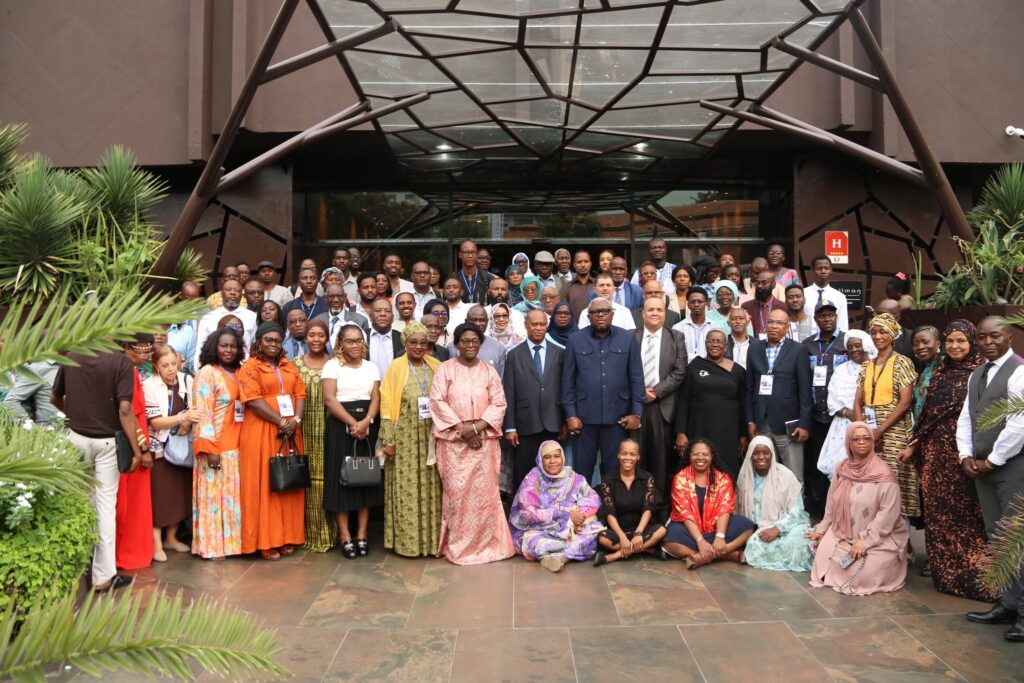
DAKAR, SENEGAL — 10 October 2026: The African Centre for Democracy and Human Rights Studies (ACDHRS) has concluded its three-day Forum of NGOs participating in the 89th Ordinary Session of the African Commission on Human and Peoples’ Rights (ACHPR), with civil society organisations calling for stronger human rights protection, greater accountability and concrete action to address the challenges facing communities across Africa.
Held from 8 to 10 October 2026 at the Pullman Dakar Teranga Hotel in Dakar, Senegal, the Forum brought together more than 350 representatives from 37 African countries, alongside participants from Europe, North America and other regions. The gathering provided a platform for human rights defenders, legal experts, civil society organisations and other stakeholders to exchange experiences, examine emerging human rights concerns and develop recommendations for engagement with the African Commission.
Under the theme, “Assuring Sustainable Water Availability and Safe Sanitation Systems to Achieve the Goals of Agenda 2063,” the Forum examined access to water and sanitation within the broader context of human dignity, equality, environmental protection, democratic governance and sustainable development.
Discussions throughout the three days highlighted the interconnected nature of human rights challenges, from shrinking civic space and unconstitutional changes of government to gender-based violence, climate change, discrimination and threats against human rights defenders.
Opening Ceremony Calls for Practical Action
The Forum opened on 8 October with calls for African governments, regional institutions and civil society to strengthen their efforts to protect fundamental freedoms and translate human rights commitments into meaningful improvements in people’s lives.
Opening contributions from ACDHRS Executive Director Hannah Forster, Governing Council Chair Hon. Justice Solomy Bossa, representatives of the African Commission, Senegalese institutions and international partners underscored the importance of sustained collaboration between civil society and regional human rights mechanisms.
Speakers stressed that the African human rights system must remain responsive to the realities confronting people across the continent, particularly communities affected by conflict, discrimination, poverty and exclusion.
The opening discussions also situated the Forum within the wider context of the African Charter on Human and Peoples’ Rights, examining its achievements, implementation challenges and continued relevance in responding to evolving human rights concerns.
Participants emphasised that the effectiveness of regional human rights standards depends on states implementing their obligations, independent institutions holding authorities accountable and civil society organisations maintaining their role in monitoring violations and advocating for reforms.
Day One: Civic Space, Conflict and Water Justice Take Centre Stage
The first day’s thematic discussions examined the protection of fundamental freedoms, democratic governance and the challenges of ensuring equitable access to essential services.
A panel on an Afro-feminist reading of shrinking civic space explored the implications of restrictions on freedom of expression, association and peaceful assembly for women and other marginalised groups. Participants examined how restrictive laws, discrimination and unequal power structures limit the ability of human rights defenders and civil society organisations to advocate for change.
The discussions highlighted the need for states to protect civic freedoms and ensure that women and other underrepresented groups can participate meaningfully in public decision-making. Participants also stressed the importance of addressing the gendered effects of restrictions on civic space and strengthening the protection of those working to defend human rights.
Another panel examined conflicts and unconstitutional changes of government, focusing on the implications for peace, security and governance in Africa.
Participants discussed the effects of political instability and armed conflict on civilian populations, democratic institutions and the enjoyment of fundamental rights. The discussions reinforced the need for accountable governance, peaceful constitutional processes, respect for human rights and stronger regional efforts to prevent conflict.
The Forum’s overarching theme of water and sanitation remained central to the day’s deliberations. Participants highlighted the disproportionate impact of water insecurity on women and girls, particularly in communities where inadequate infrastructure forces them to spend significant time obtaining water.
Civil society representatives also stressed the importance of integrating water and sanitation into public budgets, development plans and human rights monitoring. The discussions highlighted Article 15 of the Protocol to the African Charter on Human and Peoples’ Rights on the Rights of Women in Africa, known as the Maputo Protocol, in advocating for women’s access to safe drinking water.
Participants called for states to address water insecurity as a human rights concern rather than treating it solely as a technical or development issue.
Day Two: Protecting Vulnerable Groups and Defending Fundamental Freedoms
The second day expanded the discussions to include economic, social and cultural rights during armed conflict, climate justice, gender-based violence, digital transformation and the shrinking of civic space.
Economic, social and cultural rights during armed conflict
Participants examined the protection of economic, social and cultural rights in situations of armed conflict, highlighting the consequences of violence and instability for access to essential services and the protection of civilian populations.
Discussions emphasised the importance of ensuring that conflict does not become a justification for denying people access to basic services, dignity and legal protection. Participants also highlighted the need for accountability where violations occur and for stronger engagement by regional and international mechanisms.
Climate change, water scarcity and the rights of persons with albinism
Another discussion examined the effects of climate change and water scarcity on persons with albinism and other vulnerable groups.
Participants highlighted how environmental pressures can deepen existing inequalities, particularly where people already face discrimination and barriers to public services. The discussion stressed the importance of ensuring that people directly affected by human rights violations participate in decisions concerning their welfare and protection.
The panel reinforced the need for inclusive policies, better data collection and stronger measures to address the specific circumstances of persons with disabilities and other marginalised communities.
Combating gender-based violence through strategic litigation
The Forum also examined approaches to combating gender-based violence, including the use of strategic litigation and the importance of generational succession in human rights advocacy.
Participants stressed the need to strengthen legal protection for survivors, improve access to justice and address structural barriers that prevent women and girls from reporting violations or obtaining effective remedies.
The discussions also highlighted the importance of building the capacity of younger human rights defenders and ensuring that experience, knowledge and leadership are passed on to future generations.
Shrinking civic space and the protection of freedoms
The day’s deliberations further addressed restrictions on civic space and the implications for freedom of expression, association and peaceful assembly.
Participants raised concerns about the use of restrictive legislation, intimidation and other forms of pressure against human rights defenders and civil society organisations. They emphasised that protecting civic space is essential to democratic accountability and the effective functioning of human rights institutions.
The discussions called for stronger solidarity among civil society organisations, improved protection mechanisms and sustained engagement with the African Commission to address violations and promote respect for fundamental freedoms.
Day Three: Special Interest Groups Present Recommendations
The final day focused on the presentation of recommendations from special interest groups, alongside discussions on transnational repression, corruption, water and sanitation.
The special interest group presentations highlighted the multiple ways in which access to water and sanitation intersects with conflict, displacement, discrimination, environmental degradation and the enjoyment of fundamental rights.
Groups addressing peacebuilding and armed conflict called for stronger cooperation among states sharing transboundary water resources, improved water diplomacy and protection for communities affected by conflict.
Discussions on migration, refugees and internally displaced persons emphasised the need to include displaced populations and host communities in water and sanitation programmes. Participants called for sustainable infrastructure, accessible services and greater attention to the needs of women, children and persons with disabilities.
The group examining environmental protection and climate justice highlighted the consequences of pollution, unsustainable resource extraction and environmental degradation. Its recommendations called for stronger enforcement of environmental laws, effective environmental and human rights impact assessments, access to environmental information and protection for environmental human rights defenders.
Other groups focused on communities discriminated against on the basis of work and descent, indigenous peoples, and people held in prisons and other places of detention. Their discussions emphasised equality in access to essential services, protection against discrimination, improved detention conditions and stronger accountability mechanisms.
Across the presentations, participants stressed that access to safe water and sanitation must be understood as a human rights and social justice issue. They also called for recommendations to identify responsible institutions, establish implementation timelines and provide mechanisms for monitoring progress.
Transnational Repression: Human Rights Defenders Need Protection Across Borders
One of the day’s major thematic discussions examined the growing threat of transnational repression and its implications for human rights defenders in Africa.
The panel, titled “From Restrictive Laws to Transnational Repression: Protecting Human Rights Defenders in Africa,” explored how intimidation, surveillance, reprisals and other forms of repression can extend beyond national borders.
Participants highlighted the vulnerability of human rights defenders, political opponents, refugees and asylum seekers who may continue to face threats after leaving their countries of origin. Their families, colleagues, lawyers and organisations may also be affected.
The discussion stressed that crossing an international border does not necessarily guarantee safety and that states must not evade their human rights obligations by facilitating or outsourcing acts of repression.
Among the proposals discussed were a dedicated African Commission resolution on transnational repression, stronger cooperation between African and United Nations human rights mechanisms, and the establishment of a joint task force to improve coordination and protection.
Participants also called for better documentation of cases, stronger responses to reprisals and greater protection for individuals engaging with regional and international human rights institutions.
The central message was that where repression crosses borders, protection and accountability must also extend across borders.
Corruption, Water and Sanitation: Strategic Litigation for Accountability
The final thematic panel examined how corruption undermines access to water and sanitation and how strategic litigation can be used to strengthen accountability.
Moderated by Maimouna Jalloh, Communication and Publications Manager at the Institute for Human Rights and Development in Africa (IHRDA), the panel featured legal experts, including Professor Simbarashe Maguchu, Michael Gianniaco and Ibrahim Makan. The discussion also marked the launch of a report authored by Professor Maguchu.
Participants examined how the diversion of public funds, poor infrastructure management and weak oversight can deprive communities of essential services and undermine fundamental rights.
Recent flooding in Dakar provided a practical illustration of the consequences of inadequate drainage, poor waste management and infrastructure failures. While flooding is a natural hazard, the discussion highlighted how weaknesses in public systems and the management of resources can worsen its effects on communities.
The panel considered how strategic litigation can help establish legal responsibility, clarify states’ obligations and secure remedies for affected populations. Participants stressed the importance of documenting violations, monitoring public expenditure and strengthening the capacity of civil society organisations and lawyers to pursue accountability through national and regional mechanisms.
The discussion reinforced the position that corruption is not merely a financial or administrative concern. Where it contributes to the denial of essential services, it can have serious implications for the enjoyment of human rights.
Recommendations and Resolutions to Guide Further Engagement
The Forum’s deliberations culminated in the preparation of recommendations and resolutions intended to inform civil society engagement with the African Commission and strengthen human rights advocacy across the continent.
The package announced during the proceedings comprised three draft country resolutions, nine thematic resolutions and two thematic recommendations. These covered country-specific concerns and broader issues raised during the Forum.
Participants stressed that the value of these proposals would depend on their implementation and the willingness of states and regional institutions to act on them.
The recommendations called for stronger protection of civic space, improved accountability for human rights violations, more inclusive water and sanitation policies, effective environmental protection and stronger mechanisms to safeguard human rights defenders.
They also emphasised the need for sustained cooperation between civil society organisations, national institutions, the African Commission and international partners.
The announced numbers reflect the draft package presented during the proceedings; the final adoption status of each text was not independently confirmed in the available record.
Closing Ceremony: From Dialogue to Concrete Action
The closing ceremony brought together representatives of ACDHRS, the NGO Forum Steering Committee, the African Commission, civil society organisations and Senegalese institutions.
Hon. Teneng Bajayte, a member of the ACDHRS Governing Council, reflected on the three days of discussions, noting the progress made while emphasising that much more work remained to address human rights challenges across Africa.
She highlighted the Forum’s discussions on water availability, safe sanitation, shrinking civic space, democratic governance, women’s and girls’ rights, digital transformation and climate justice.
Her remarks stressed the importance of solidarity among human rights defenders and the need to translate the Forum’s recommendations into meaningful action at national, regional and continental levels.
Sidi Gassama, Executive Director of Amnesty International Senegal, welcomed the Forum to Dakar and highlighted the continuing challenges of access to clean drinking water and shrinking civic space. He emphasised the value of civil society gatherings in enabling organisations to exchange experiences, assess challenges and strengthen their collective efforts to promote and protect human rights.
Aminata Falmiah, President of the Association of Senegalese Jurists, called for the outcomes of the Forum to produce tangible improvements in people’s lives. She highlighted the disproportionate burden of water insecurity on women and girls and urged states to translate commitments into accessible services, adequate budgets and inclusive public policies.
Hussein Tomassi, Solicitor General and Legal Secretary of The Gambia’s Ministry of Justice, also underscored the importance of accessible water and sanitation services, effective legal protection and meaningful participation by civil society.
Uju Agamu, representing civil society in the vote of thanks, highlighted the challenges posed by shrinking civic space and declining financial resources for civil society organisations. She called for greater support to ensure that human rights organisations remain capable of carrying out their work.
In his closing remarks, Commissioner Remy Ngoilumbu of the African Commission’s human rights defenders and reprisals mechanism reaffirmed the importance of civil society participation in the African human rights system. He encouraged continued engagement with the Commission and stressed the need to translate regional standards into national laws, policies and effective remedies.
The closing ceremony reinforced a shared message: human rights protection requires more than declarations and resolutions. It demands sustained political commitment, institutional accountability and practical measures that respond to the needs of affected communities.
A Continued Commitment to Human Rights in Africa
The conclusion of the 89th ACHPR NGO Forum in Dakar marked the end of three days of dialogue, reflection and collective engagement, but not the end of the work required to advance human rights across Africa.
From access to water and sanitation to the protection of human rights defenders, the discussions demonstrated how closely human dignity, equality, environmental protection and democratic governance are connected.
The Forum reaffirmed the important role of civil society in documenting violations, amplifying the voices of affected communities and holding public institutions accountable. It also underscored the need for stronger cooperation between NGOs and the African Commission to address emerging threats and ensure that human rights commitments are translated into action.
As participants prepare to continue their engagement with the African Commission during its 89th Ordinary Session, the challenge will be to sustain the momentum generated in Dakar and ensure that the Forum’s recommendations contribute to stronger protections and meaningful change.
For ACDHRS and its partners, the message remains clear: the defence of human rights is a collective responsibility, and the true measure of the Forum’s success will be the action taken to protect people’s rights and improve their lives across Africa.
