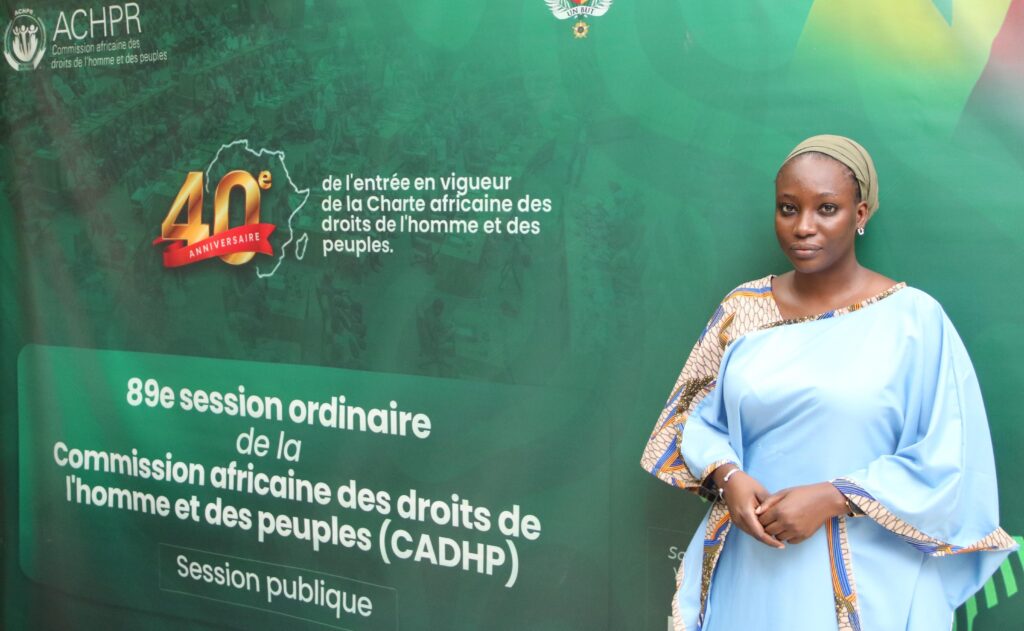
Ms Ellen Ann, Programs Officer of the African Centre for Democracy and Human Rights Studies (ACHPR), on 12 October 2026, presented the summary report of the Forum of NGOs participating in the 89th Ordinary Session of the African Commission on Human and Peoples’ Rights (ACHPR), outlining key human rights concerns, deliberations and recommendations emerging from the three-day gathering held in Dakar, Senegal.
The Forum, coordinated by the African Centre for Democracy and Human Rights Studies (ACDHRS), took place from 8 to 10 October 2026 ahead of the Commission’s 89th Ordinary Session. It brought together more than 366 participants representing 37 African countries, alongside participants from Europe, North America, Canada, the United Kingdom, South America and the Middle East, according to the summary report.
The gathering provided a platform for civil society organisations, human rights defenders and other stakeholders to examine the state of human rights and democratic governance across Africa and develop collective proposals for engagement with the African Commission.
Presenting the report, Ms Ann highlighted the breadth of the discussions, which included regional human rights assessments, thematic panel sessions, Special Interest Group deliberations and the development of proposed resolutions and recommendations.
Water justice at the centre of the Forum
The 2026 African Union theme, “Assuring Sustainable Water Availability and Safe Sanitation Systems to Achieve the Goals of Agenda 2063,” provided the central framework for the Forum.
The discussions examined access to water and sanitation as fundamental human rights issues closely connected to dignity, equality, health and sustainable development.
The inaugural panel explored the relationship between discrimination based on work and descent and access to water, sanitation and public services. Participants examined how historical and structural exclusion can prevent marginalised communities from accessing essential services.
Discussions on corruption, water and sanitation also highlighted the need for transparent public spending, effective oversight and access to remedies for communities affected by failures in public service delivery.
Wide-ranging discussions on Africa’s human rights situation
The Forum featured more than 12 panel discussions examining critical challenges affecting human rights and democratic governance across the continent.
The panels addressed the shrinking of civic space from an Afro-feminist perspective; conflict and unconstitutional changes of government; economic, social and cultural rights in armed conflict; climate change and the rights of persons with albinism and persons with disabilities; and combating gender-based violence through strategic litigation.
Other sessions focused on digital rights and youth participation, emerging challenges for human rights defenders in the Sahel, the armed conflict in Sudan, civic space and cross-border challenges in Central Africa, transnational repression, and the role of strategic litigation in tackling corruption and protecting access to water and sanitation.
Across the discussions, participants called for stronger protection mechanisms, meaningful participation by affected communities, better accountability and monitoring, improved access to justice and more effective implementation of human rights commitments.
Special Interest Groups deepen technical engagement
The Forum also convened eight Special Interest Groups, allowing participants to examine specific human rights concerns in greater depth.
These groups covered peacebuilding, conflict resolution and armed conflict; migration, internally displaced persons and refugees; freedom of assembly and association and the protection of human rights defenders; environmental protection, climate justice and ecocide; communities discriminated against on the basis of work and descent; torture, prisons and places of detention; indigenous peoples; and enforced disappearances in Africa.
The discussions emphasised the need for stronger safeguards, improved cooperation between institutions and greater attention to the experiences of communities most affected by human rights violations.
Participants also called for clearer recommendations identifying responsible institutions, timelines and mechanisms for monitoring progress.
Forum produces a package of resolutions and recommendations
A key outcome of the Forum was the consolidation of participants’ concerns into a package of proposed resolutions and recommendations for engagement with the African Commission and other relevant institutions.
According to the summary report, the package comprised three country resolutions concerning Somalia, Madagascar and Guinea-Bissau, nine thematic resolutions and three thematic recommendations, making a total of 15 proposed outcomes.
The thematic resolutions addressed follow-up to previous decisions; protection of human rights defenders against reprisals and judicial harassment; transnational repression; ending female genital mutilation and advancing justice for survivors of gender-based violence; abolition of the death penalty; water management; climate resilience and water security for drought-affected pastoralist communities; albinism; and enforced disappearances.
The thematic recommendations focused on human rights, migration and human trafficking; freedom of religion or belief and efforts to combat violent extremism and religious or ethno-religious violence; and indigenous communities.
These outcomes provide a basis for further engagement with the African Commission, Member States, national human rights institutions and other stakeholders working to advance human rights protection across Africa.
Calls for implementation and stronger accountability
The summary report stressed that the Forum’s deliberations must lead to concrete action beyond the meeting itself.
Participants called for States and civil society to move from commitments to implementation and ensure that human rights protections reach the people and communities most affected by violations.
The recommendations highlighted the importance of strengthening accountability, improving access to justice, protecting civic space, ensuring equitable access to essential services and increasing the participation of affected communities in decisions concerning their rights and livelihoods.
The report also emphasised the need for greater cooperation among the African Commission, States, civil society organisations and other relevant institutions to monitor the implementation of recommendations and resolutions.
Civil society engagement must continue beyond Dakar
In presenting the report, Ms Ann underscored the significance of the Forum as a platform for bringing together voices from across Africa and ensuring that regional human rights concerns are reflected in the work of the African Commission.
The report expressed appreciation to the Honourable Commissioners who participated in the Forum, as well as partners, volunteers and others whose contributions supported the organisation of the three-day gathering.
It also reaffirmed the importance of sustained collaboration between civil society and regional human rights institutions in addressing the continent’s human rights challenges.
As the Forum gives way to the 89th Ordinary Session, its findings and proposed outcomes provide a foundation for continued dialogue and advocacy on human rights, democratic governance, access to justice and accountability.
The report concluded with a clear message: human rights cannot remain promises on paper. The recommendations and resolutions emerging from Dakar must inform decisions, guide institutional action and contribute to measurable improvements in the lives of African people.
For ACDHRS and participating civil society organisations, the conclusion of the Forum marks not the end of the process, but the beginning of renewed efforts to ensure that its outcomes translate into meaningful protection and accountability across Africa.
