FORUM ON THE PARTICIPATION OF NGOs IN THE 87TH ORDINARY SESSION OF THE AFRICAN COMMISSION ON HUMAN AND PEOPLES’ RIGHTS
SDKJC, BANJUL, THE GAMBIA
08THMAY 2026
Day Two of the Forum of NGOs Participating in the 87thOrdinary Session of the African Commission on Human and Peoples’ Rights (ACHPR) brought together human rights defenders, civil society organizations, activists, legal experts, diplomats, and representatives of regional human rights institutions to reflect on some of the most pressing crises facing the African continent. Across the different panels and working group sessions, discussions centered on armed conflict, unconstitutional changes of government, migration and displacement, gender-based violence, shrinking civic space, climate insecurity, and access to water and sanitation. While the conversations exposed the devastating human rights consequences of these crises, they also highlighted the resilience of grassroots movements, feminist organizations, and communities working to advance peace, justice, and dignity across Africa.
Panel 4: Beyond Ceasefires – Countering Backlash Through Feminist Approaches to Peace and Justice
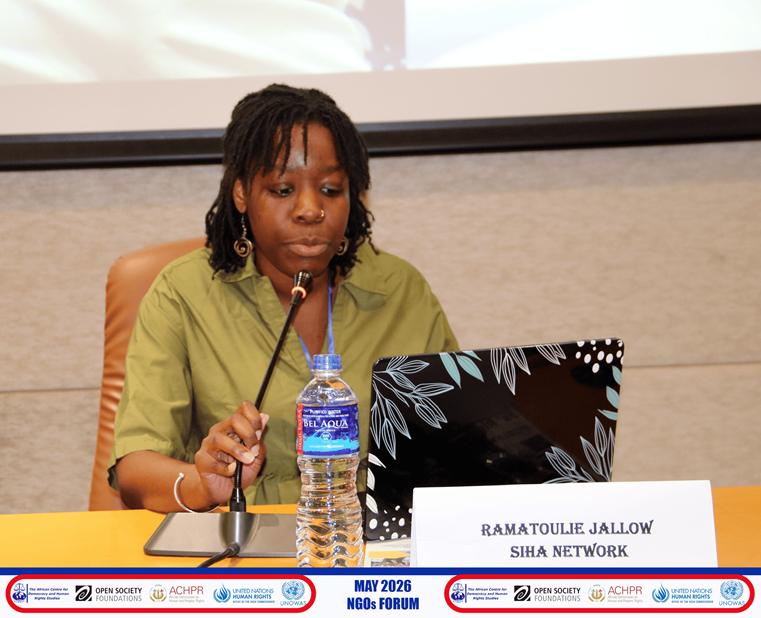
The day opened with Panel 4, titled “Beyond Ceasefires: Countering Backlash Through Feminist Approaches to Peace and Justice,” moderated by Ramatoulie Jallow of SIHA Network. The panel brought together Naima Hassan from Somalia, Worknesh Begi from Ethiopia, Zainab Mohamed from Sudan, and Honorable Commissioner Janet Ramatoulie Sallah-Njie of the African Commission on Human and Peoples’ Rights. The discussion examined the impact of conflict, militarization, governance failures, climate insecurity, and shrinking civic space on women and girls across the Horn of Africa.
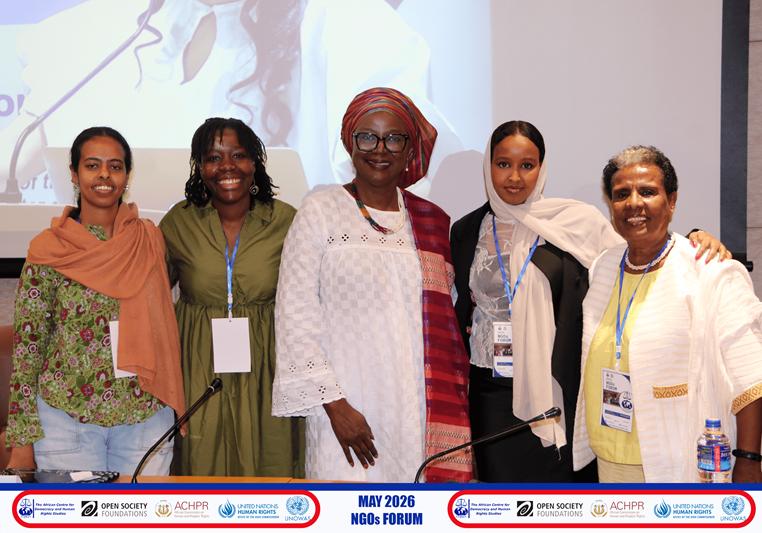
Opening the discussion, Ramatoulie Jallow explained that the panel sought to challenge narrow understandings of peace that focus solely on ceasefires and political settlements while ignoring the lived realities of women affected by conflict. She stressed the importance of redirecting state resources away from militarization toward gender-responsive governance and social protection systems.
Speaking on Somalia, Naima Hassan described how decades of instability, climate disasters, displacement, and weak governance structures have exposed women and girls to sexual violence, exploitation, and deep insecurity. She highlighted the difficulties faced by women journalists and activists who speak openly about women’s rights and gender-based violence, noting that cultural and religious backlash often silences women human rights defenders. Despite these challenges, she emphasized the resilience of Somali women and grassroots feminist movements.
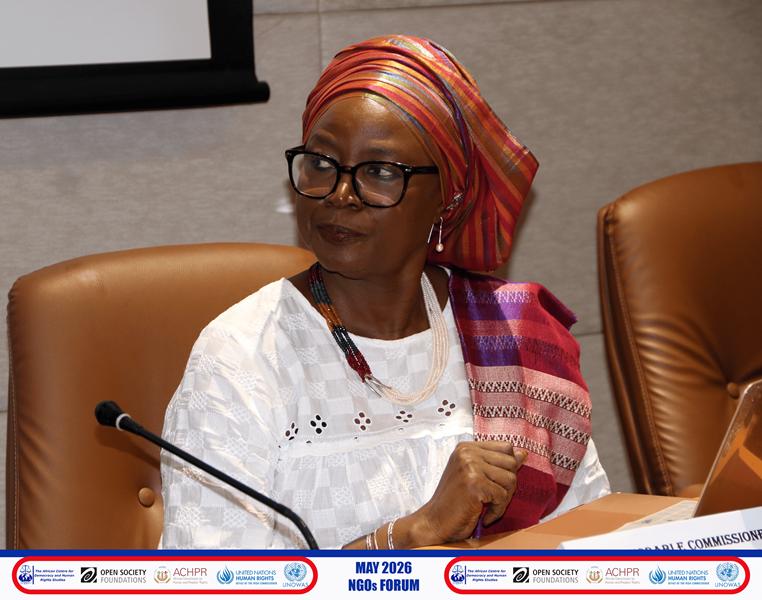
“Women continue to mediate local conflicts, facilitate dialogue between rival clans, support survivors of violence, provide legal aid, and advocate for women’s inclusion in peacebuilding processes,” she stated.
Zainab Mohamed provided a grim overview of the situation in Sudan following the outbreak of war in 2023. She explained that women and girls have become primary targets of violence, with SIHA Network documenting more than 1,425 cases of gender-based violence and conflict-related sexual violence. According to her, women remain unsafe in homes, markets, workplaces, and along displacement routes.
“Women are unsafe everywhere,” she stressed.
Zainab further explained that the collapse of public institutions and underfunding of health and protection services have left survivors without access to justice, psychosocial support, and medical care. Nevertheless, she praised the emergence of feminist emergency response initiatives and women-led networks that continue to provide legal aid, safe spaces, survivor support systems, and community-based protection mechanisms.
Worknesh Begi reflected on the situation in Oromia, Ethiopia, where conflict and climate insecurity continue to increase women’s vulnerability to violence and exclusion. She noted that droughts, displacement, and resource scarcity have reinforced patriarchal practices, including child marriage and the exclusion of women from decision-making processes. She emphasized the importance of survivor-centered justice approaches and grassroots women’s organizations that provide shelter, psychosocial support, legal aid, and educational opportunities for displaced women and girls.
Providing reflections from the African Commission, Commissioner Janet Ramatoulie Sallah-Njie emphasized that peace must go beyond ceasefires and military agreements. She underscored the importance of accountability, inclusion, justice, and women’s participation in all peacebuilding processes.
“There can be no sustainable peace without women’s rights and no meaningful justice while women remain excluded from shaping the future of their societies,” she stated.
The panel concluded with an interactive discussion during which participants raised concerns about the protection of women human rights defenders, the implementation of accountability mechanisms, and the need for more direct engagement with perpetrators of violence.
Panel 5: Peace, Security, and Unconstitutional Changes of Government
The second major session of the day, Panel 5 on “Peace, Security, and Unconstitutional Changes of Government,” focused heavily on the ongoing crisis in Sudan and the broader rise of coups and unconstitutional transitions across Africa. Moderated by Mr. Naji Moulay Lahsen, the panel brought together diplomats, civil society representatives, and experts to examine the human rights consequences of political instability and armed conflict.
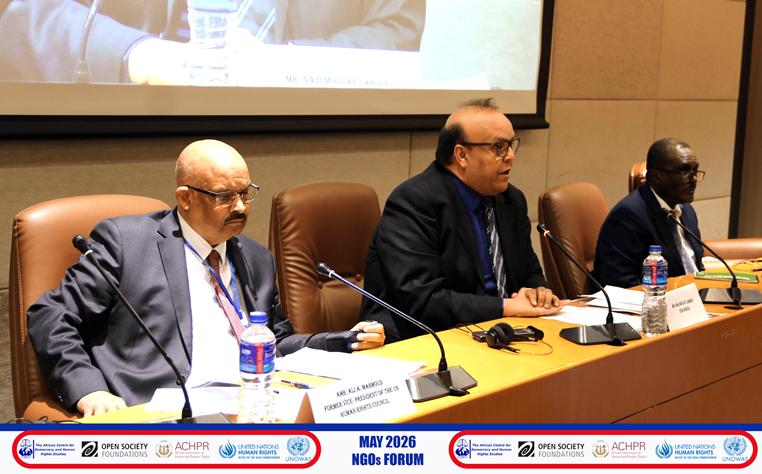
Opening the discussion, Mr. Lahsen warned that Africa is experiencing “a very critical moment with crisis, with conflict, with systematic change of government.” He referenced the coups and political instability witnessed in Burkina Faso, Niger, Mali, Guinea, and Chad, stressing that unconstitutional changes of government continue to undermine democratic governance and fuel prolonged violence.
Focusing on Sudan, he described the scale of devastation caused by fighting between the Sudanese Armed Forces and the Rapid Support Forces (RSF).
“70% of this country’s infrastructure has been destroyed by the two warring parties,” he stated, while also highlighting widespread sexual violence, ethnic divisions, and hate speech.
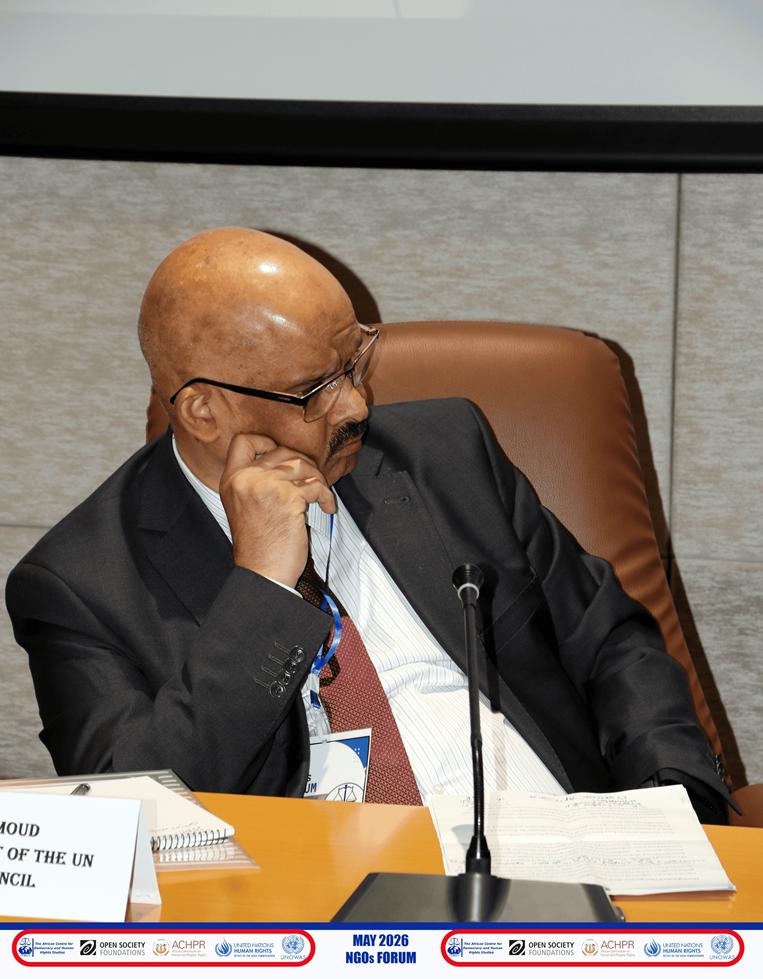
Ali Abid Talib, former president of the United Nations Human Rights Council and former ambassador of the Sudanese Government in Geneva, reflected on the political developments that preceded the war, tracing the crisis back to the October 2021 coup d’état. He explained that Sudan had previously made progress in rebuilding relations with international human rights institutions, but the outbreak of war reversed those gains and led to renewed international scrutiny.
“We need to work closely with the international community, with our regional organization, the African Union… to try to put an end to this shameful, catastrophic and devastating war,” he said.
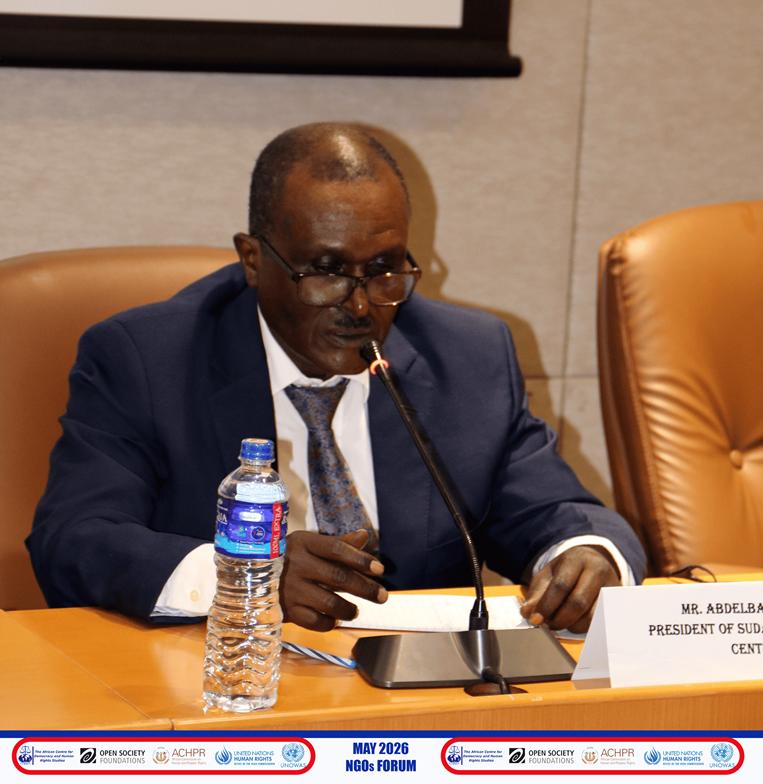
Another key intervention came from Abdelbagi Jibril, International Development Expert and President of Sudan Knowledge Centre, who addressed allegations concerning the use of chemical weapons in Sudan. He described the accusations as extremely serious and called for transparent investigations and accountability mechanisms.
“We failed to protect ourselves. We failed to protect our country,” he admitted.
He further emphasized the need to address the root causes of Sudan’s recurring conflicts, warning that unless these issues are confronted directly, the country will remain trapped in cycles of violence.
“Sudan is a real patient. It’s a dying one,” he stated.
One of the most emotional moments of the session came during the intervention by Commissioner Rémy Ngoy Lumbu, who questioned why international institutions had hesitated to recognize the atrocities in Sudan as genocide despite mounting evidence.
“All the elements constituting a genocide are almost united,” he argued, emphasizing that victims deserve recognition, justice, and accountability.
Throughout the discussion, participants repeatedly called for stronger African Union engagement, accountability for perpetrators, democratic reforms, and sustained international solidarity with the Sudanese people.
Panel 6: Migrants, Refugees, and Internally Displaced Persons (IDPs) in Northern Africa
Panel 6 focused on “Migrants, Refugees, and Internally Displaced Persons in Northern Africa: Situation, Challenges, and Protection Frameworks.” Moderated by Cheikh Sidati Hamady, the session explored the humanitarian, legal, and political dimensions of migration across North and West Africa.
Mr. Sadikh Niass of ACDHRS discussed how conflict, insecurity, poverty, and climate change continue to drive forced migration across the continent. He noted that migration in Africa is increasingly shaped by climate insecurity and environmental crises.
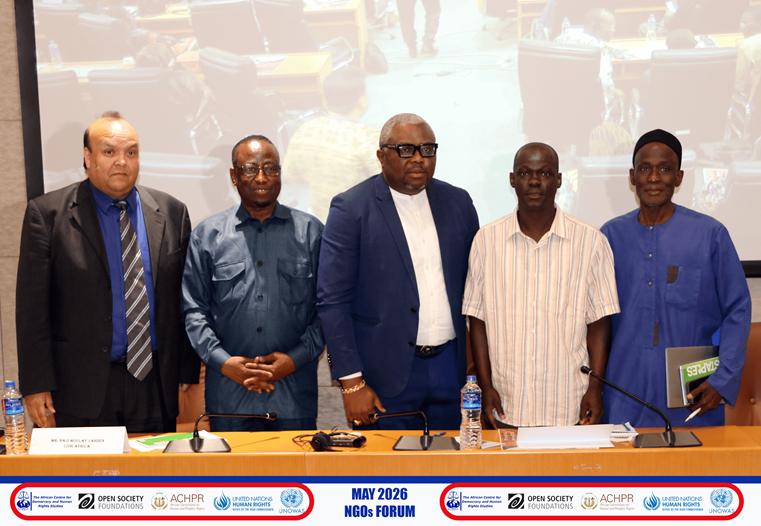
“Today, we are recognizing that among migrations, there are forced migrations due to climate change,” he explained.
He also criticized restrictive migration and border control policies, arguing that such measures only force migrants to use more dangerous routes.
“Control policies only shift the routes rather than stopping the movement,” he said.
Mr. Abdoulaye Diallo of RADDHO focused on migration from a human rights perspective, particularly the experiences of migrant women under the Kafala sponsorship system in some Arab and Gulf countries. He warned that many migrant women face severe abuse, violence, and exploitation while lacking adequate legal protection.
“We have identified serious human rights violations in some countries where migrant women lack protection under the Kafala system,” he stated.
Mr. Naji Moulay Lahsen of CIDH strongly condemned the treatment of migrants in Northern Africa, describing widespread patterns of xenophobia, racism, trafficking, and slavery.
“Migrants in Northern Africa are undergoing xenophobia, racism, discrimination, and slavery,” he stressed.
He also recounted the story of a young migrant from Mali who died after being tortured and abandoned outside Tripoli, illustrating the brutality many migrants face during their journeys.
Audience contributions further highlighted concerns regarding xenophobia, European migration policies, and the invisibility of migrants’ suffering. Sira Ndongo observed that many young Africans feel trapped by poverty and exclusion.
“Millions of young people prefer to risk death at sea rather than continue living in daily humiliation in their own land,” she remarked.
Specia Interest Groups:
The Special Interest Groups comprised seven thematic working groups, including: the Working Group on Communities Discriminated on the Basis of Work and Descent (CWD); Political Tensions in Africa; Freedom of Assembly; Health Services for Women, Children, and Marginalized Communities; Migration, Internally Displaced Persons (IDPs), and Refugees in Africa; Peacebuilding, Conflict Resolution, Armed Conflicts, Military Coups, and Democratic Consolidation; and Women’s Rights and Gender-Based Violence in Africa.
These thematic areas formed the core of discussions during the Special Interest Group breakout sessions. Following their deliberations, participants, through their respective group leaders, presented key inputs and recommendations.
The reporting session served as a powerful platform for dialogue, reflection, and collective advocacy, bringing together experts, civil society representatives, human rights defenders, and participants from across Africa to address some of the continent’s most pressing challenges related to water and sanitation, governance, peace and security, migration, gender equality, and socio-economic development.
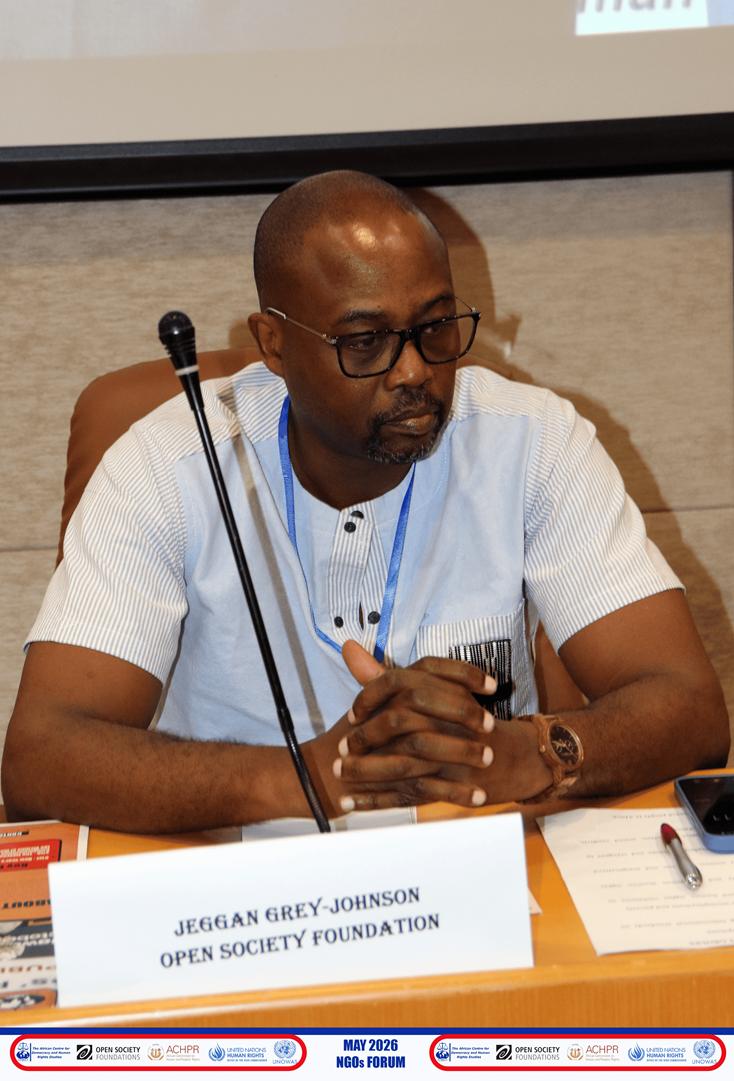
Moderated by Mr. Jeggan Gray Johnson, the session underscored the urgency of ensuring equitable access to water and sanitation as a fundamental human right closely linked to dignity, health, peace, and sustainable development. In his opening remarks, the moderator encouraged participants to remain focused and collaborative despite the limited time, emphasizing that every contribution formed part of a broader continental effort toward justice and accountability.
The first presentation was delivered by Sheikh Hamadi on behalf of the Working Group on Communities Discriminated on the Basis of Work and Descent (CWD). The group highlighted the persistent inequalities faced by marginalized communities in accessing clean water and sanitation services, particularly in rural areas. Discussions focused on structural discrimination, the high cost of water for poor households, and the disproportionate impact on women and girls. The group called for inclusive water governance, stronger legal protections, and increased investment in vulnerable communities.
This was followed by a presentation from Sylla Bouyeh Mahamadou on Economic Challenges, Youth Unemployment, and Poverty. The group emphasized the growing socio-economic pressures facing young people across the continent and advocated for policies centered on employment creation, quality education, entrepreneurship support, and climate resilience. Participants stressed the importance of involving youth, women, and marginalized communities in policy-making processes.
Representing the group on Political Tensions in Africa, Tia Marcel from Côte d’Ivoire examined the root causes of political instability, including weak institutions, corruption, inequality, disinformation, and exclusion. The presentation highlighted the devastating consequences of political tensions on governance, security, and development while proposing inclusive dialogue, institutional reforms, civic education, and stronger participation of women and youth in peace processes.
Another thematic group focused on Freedom of Assembly, Association, and Human Rights Defenders, where participants raised concerns over shrinking civic space and increasing repression against environmental and water rights defenders. The group discussed how activists advocating for clean water and environmental justice are increasingly criminalized across several African countries and called for stronger protections for civil society actors and human rights defenders.
Speaking on behalf of the group on Health Services for Women, Children, and Marginalized People, Reine BOSSA, Executive Director of the NGO APRETECTRA Benin, emphasized that access to drinking water and sanitation remains central to public health, dignity, and sustainable development. The group drew attention to the severe impact of inadequate water systems on women, children, and vulnerable populations, particularly in rural communities affected by climate change, floods, droughts, and pollution.
The discussion on Migration, Internally Displaced Persons (IDPs), and Refugees in Africa was presented by Mr. Sidi Akhmed and Sarah Choudiata of Mauritania, alongside Mr. Philippe Nanga of Cameroon. Their presentation highlighted the vulnerability of migrants and displaced populations who often face life-threatening conditions due to lack of water and sanitation during migration journeys. The group called for stronger regional cooperation, sustainable financing for infrastructure, and greater protection for vulnerable populations.
Guillaume Touzongo of the SEMA Organization in the Democratic Republic of Congo presented the report on Peacebuilding, Conflict Resolution, Armed Conflicts, Military Coups, and Consolidation. The group stressed that water infrastructure is increasingly targeted during armed conflicts, depriving vulnerable populations of essential services. Among their key recommendations was the recognition of sabotage against water and sanitation infrastructure as a war crime, alongside stronger community protection mechanisms and decentralized water governance.
Ms. Marieme Diop, President of the Association des Juristes Sénégalaises, serving as rapporteur of the ACHPR Peace and Security Working Group, presented the group’s report on peacebuilding, conflict resolution, armed conflicts, military coups, and post-conflict consolidation. The report emphasized the strong link between access to water and the enjoyment of fundamental rights such as health, education, and human dignity, highlighting how vulnerable populations in conflict zones are disproportionately affected when water access is restricted or used as a weapon of war. It underscored the role of civil society in raising awareness and supporting community-based water management systems, while calling on States to decentralize water governance, strengthen legal and institutional frameworks, and establish resilience mechanisms to address climate change, environmental degradation, and resource-management challenges in conflict-affected areas. The report further urged Member States to commit to protecting the rights to water and sanitation in line with the aspirations of Agenda 2063, particularly the vision of a peaceful and secure Africa, and recommended recognizing attacks on water infrastructure as war crimes while reinforcing protection measures for essential infrastructure in conflict zones.
The final presentation was delivered by Sehé Geneviève Traoré, Association Munyu des Femmes (AMF) on Women’s Rights and Gender-Based Violence in Africa. The group emphasized the importance of involving women in water governance and management structures while advocating for increased investments in sanitation services, protection of water supply sites, and stronger safeguards against gender-based vulnerabilities linked to inadequate water access.
Throughout the session, a common message emerged: access to clean water and sanitation is not merely a development concern, but a critical human rights issue deeply connected to equality, peace, public health, climate justice, and human dignity. Participants repeatedly called for stronger accountability from states, protection for vulnerable communities, increased regional cooperation, and inclusive governance mechanisms capable of addressing the continent’s growing challenges.
The session concluded with renewed commitment from participants to continue advocating for equitable access to water and sanitation while strengthening human rights protections and sustainable development efforts across Africa.
